
 English
  Français
 عربى
عربى Español
 中文简体
中文简体News
Wood pencils remain a core writing and drawing tool across schools, offices, studios, and promotional markets. Behind every finished pencil stands a structured manufacturing process that balances raw material control, machining precision, and assembly efficiency. A professional Wood Pencils Factory operates through coordinated production stages that shape performance, durability, and appearance.
Raw Material Selection in a Wood Pencils Factory
Material quality starts with wood and core composition. For graphite pencils, the writing core is made from graphite blended with clay. Different ratios create varying hardness grades, allowing smooth writing or darker sketch lines. For colored pencils, pigment is mixed with wax or oil binders to produce vibrant color output.
The wooden barrel supports and protects the core. Straight grain, controlled density, and stable moisture content allow smooth machining and clean sharpening. A Wood Pencils Factory typically dries timber in controlled kilns before cutting it into slats. Balanced moisture helps maintain structural integrity during shaping and painting.
Material screening at this stage influences downstream efficiency and reduces machining waste.
Step-by-Step Wood Pencils Production Process
A Wood Pencils Factory follows a structured production sequence:
1. Slat Preparation
Wood boards are cut into thin slats. Grooves are milled into each slat to hold graphite or colored cores. Groove depth must match core diameter precisely.
2. Core Placement and Bonding
Graphite or pigment cores are laid into the grooves. Adhesive is applied evenly before another grooved slat is pressed on top. This creates a bonded "sandwich" panel.
3. Shaping
The bonded panels are cut into individual strips and shaped into round, hexagonal, or triangular barrels. Profile cutters determine the final geometry.
4. Sanding and Surface Preparation
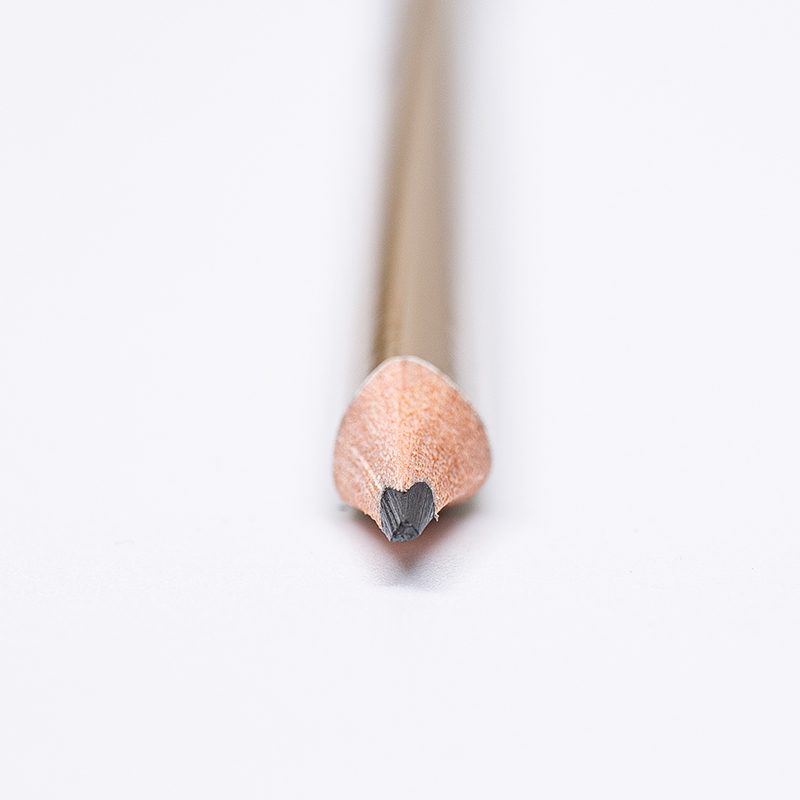
Smooth sanding prepares the surface for coating. Uniform sanding supports even paint application.
5. Painting and Finishing
Multiple layers of paint or lacquer are applied, with drying cycles between coats. Branding, logos, and grade markings are printed afterward.
6. Assembly
Ferrules and erasers are attached when required. Each pencil passes through visual and dimensional inspection before packing.
This coordinated workflow allows a Wood Pencils Factory to maintain steady output while preserving dimensional accuracy.
Equipment That Supports Production Stability
Modern facilities rely on automated grooving machines, core alignment systems, hydraulic presses, shaping mills, and painting lines. Precision cutting heads shape barrels consistently across batches.
Automation reduces dimensional variation and supports high-volume runs without compromising structural alignment. Controlled drying tunnels between paint layers prevent surface defects such as bubbling or uneven coating.
Customization in a Wood Pencils Factory
Customization involves diameter, shape, paint color, logo printing, and hardness grade. A structured Wood Pencils Factory integrates flexible tooling to support multiple barrel shapes without disrupting core alignment.
Branding processes include hot stamping or screen printing. Surface coating compatibility must align with ink adhesion properties.
When adjusting hardness grades for graphite lines, formulation changes occur at the core production stage rather than the wood shaping stage. Coordination between departments maintains production continuity.
Production Planning and Lead Time Management
Lead time management depends on raw material stock, production scheduling, and finishing capacity. Wood conditioning cycles and paint drying times influence output rhythm.
Factories operating multiple shaping and coating lines can stagger production phases. This reduces idle intervals and maintains a consistent supply flow.
A structured Wood Pencils Factory integrates these stages into a cohesive manufacturing system. From slat preparation to final inspection, each process step influences usability, sharpening behavior, and visual presentation.
Understanding these manufacturing fundamentals clarifies how consistent wood pencils are produced at scale while maintaining structural balance and writing performance.
 Previous