
 English
  Français
 عربى
عربى Español
 中文简体
中文简体News
A pencil is wood, graphite, and a thin layer of paint. It sharpens, it writes, it erases. The graphite pencil factory turns those three materials into a product that sells by the billion. The core is mixed and fired. The wood is cut, grooved, and glued. The pencil is shaped, painted, and printed. Each step is simple. Getting them to work together is not.
The Core Is a Recipe, Not a Material
Graphite does not come out of the ground in pencil form. It is graphite powder, clay, and water, blended into a paste, extruded through a die, dried, and fired in a kiln. The ratio of graphite to clay sets the hardness. More clay, harder pencil. More graphite, darker mark. The H and B scale is a range of that one ratio.
A graphite pencil factory runs different batches for the different grades. The mixing has to be consistent or the 2B from one batch writes different from the 2B in the next. The fired cores are tested for hardness and break strength before they go anywhere near the wood.
The core also has to be straight. A core that bends or bows during firing will not sit centered in the slat. An off-center core sharpens unevenly and the point breaks. The factory controls the drying and the firing curve to keep the core true.
The Wood Has to Disappear in the Sharpener
Cedar is the traditional wood. It sharpens smooth, resists cracking, and smells right. But cedar costs more every year. Poplar and basswood have become the standard substitutes. A graphite pencil factory working with poplar or basswood manages moisture content, grain straightness, and slat thickness the same way it would with cedar.
Moisture is the quiet problem. Wood that is too dry absorbs humidity and warps. Wood that is too wet shrinks after assembly and cracks the paint. The factory dries the slats to between eight and twelve percent moisture before the grooving and gluing.
Two grooved slats sandwich the core. The groove depth has to match the core diameter. Too deep and the glue squeezes into the groove. Too shallow and the core does not bond. A factory that holds the groove tolerance produces a pencil that does not split along the glue line.
The Shape, the Paint, and the Print
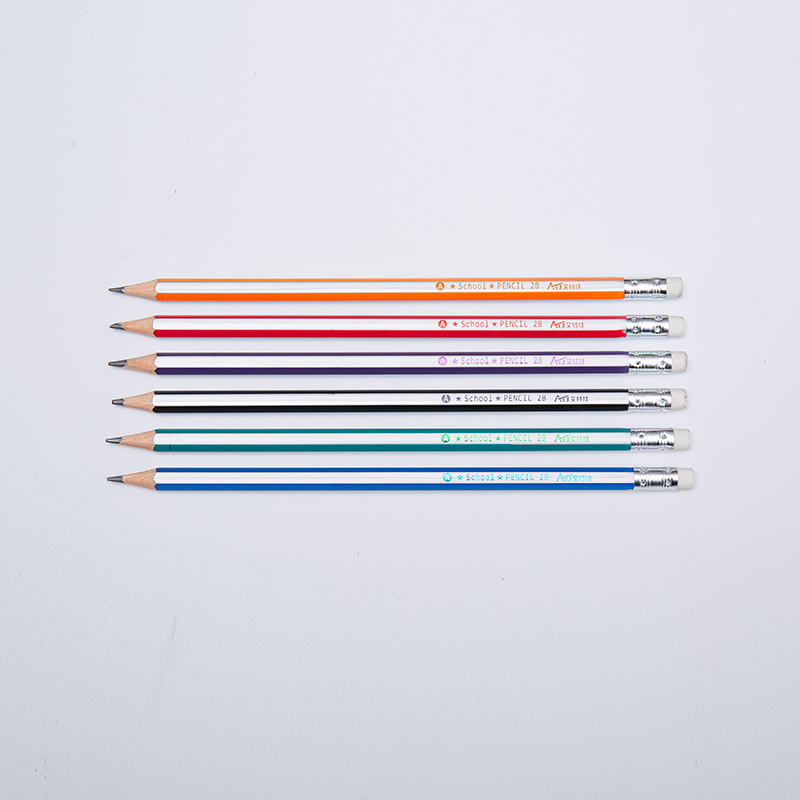
The glued slats are shaped into a round or hexagonal barrel. The hex is the standard for the writing pencil because it does not roll off the desk. The shape is cut by a rotary cutter or a planer. The surface has to be smooth for the paint.
The paint is applied in multiple coats. Each coat is cured before the next. The finish has to be smooth in the hand and hard enough to resist dents. The factory prints the brand, the grade, and the barcode on the barrel. The print has to stay legible after the sharpener and the pencil case.
The ferrule and the eraser are the last steps. The ferrule is crimped onto the end. The crimp force has to hold the eraser without splitting the wood. The eraser is pressed into the ferrule. It has to erase clean without smearing or tearing the paper.
Here is what a graphite pencil factory needs to deliver:
- Consistent graphite-to-clay ratio for each grade
- Cores that fire straight and hold their strength
- Wood dried to the right moisture content
- Groove depth matched to the core diameter
- Paint that survives the sharpener
- Ferrule crimp that holds without splitting
- Eraser that erases clean
Where the Pencils Go
School systems buy by the truckload. The pencils go into classrooms and exam halls. The mark has to read the same from one pencil to the next.
Promotional companies buy pencils printed with logos. The print has to be sharp and the pencil has to be cheap enough to give away.
Stationery brands sell pencils in packs at retail. The packaging presents the product and the pencils inside have to match.
The Pencil That Fails the Sharpener
The core is off-center and the point breaks. The wood was not dried and the pencil warps. The paint chips at the edges. The ferrule splits the barrel. None of these are mysterious. They are the steps the factory either controlled or did not.
A graphite pencil factory makes a product nobody thinks about until it fails. The core writes. The wood sharpens. The paint protects. Choose a factory that controls the blend, the moisture, and the crimp. The pencil works and nobody notices.
 Previous