
 English
  Français
 عربى
عربى Español
 中文简体
中文简体News
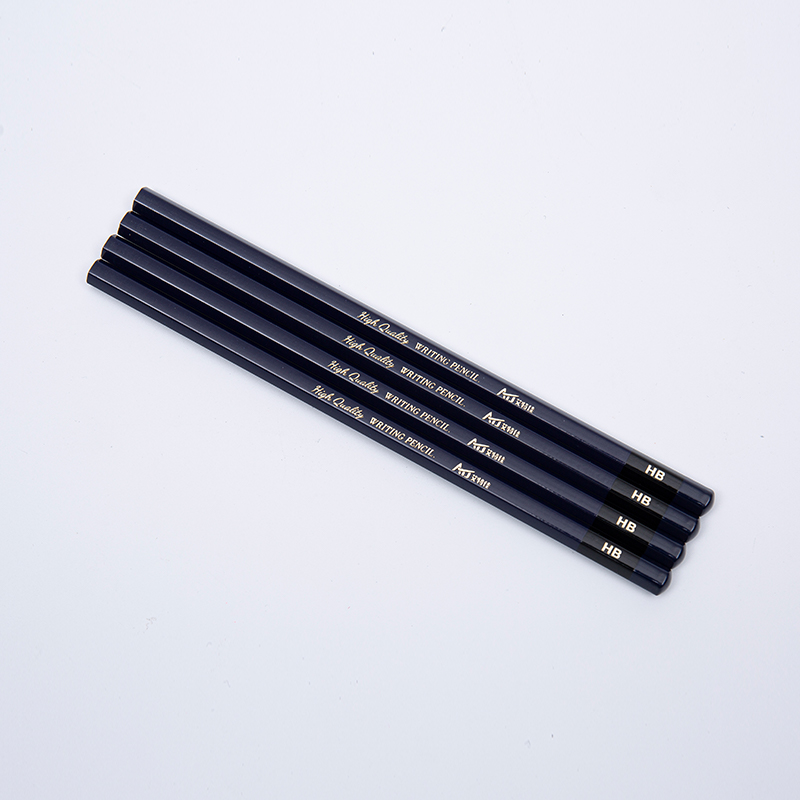
The HB pencil is the default. It sits in the exam hall, the office drawer, the school bag. The "HB" marks the middle of the graphite hardness scale, hard enough to hold a point, soft enough to leave a dark line without pressing. Millions are made every year. An HB pencil manufacturer builds them by the container load, and the quality standard is simple: the pencil has to sharpen clean, write dark, and survive the drop.
The Core Is a Ratio
Graphite does not come out of the ground in pencil form. It is graphite powder mixed with clay, blended with water, extruded through a die, and fired in a kiln. The ratio of graphite to clay sets the hardness. HB sits at roughly 60 percent graphite and 40 percent clay. More clay makes a harder pencil. More graphite makes a softer, darker one.
An HB pencil manufacturer controls this ratio with precision. A batch that drifts soft writes too dark and wears down fast. A batch that drifts hard writes light and needs pressure. The fired cores are tested for hardness, smoothness, and break resistance before they ever reach a slat of wood.
The core also has to be centered. An off-center core sharpens unevenly. One side of the point has bare graphite, the other has wood. An HB pencil manufacturer that holds centering tolerance produces a pencil that sharpens the same way every time.
The Wood That Disappears in the Sharpener
Cedar is the traditional choice. It sharpens smooth and resists cracking. But cedar costs more every year. Poplar and basswood have become the standard substitutes, especially for school pencils. A pencil manufacturer working with poplar or basswood manages the same quality factors: moisture content, grain straightness, and slat thickness.
Two grooved slats sandwich the graphite core. They are glued, then shaped into a round or hexagonal barrel. The groove depth has to be exact. Too deep and the glue squeezes into the groove. Too shallow and the core does not bond. An HB pencil manufacturer that holds groove tolerances produces a pencil that does not split along the glue line.
Moisture content matters throughout. Wood that is too dry absorbs humidity and warps. Wood that is too wet shrinks after assembly and cracks the lacquer. An HB pencil manufacturer dries the slats to between 8 and 12 percent moisture before the grooving and gluing.
The Lacquer, the Ferrule, and the Eraser
The lacquer is the visible surface. It covers the wood, hides the seam, and carries the brand color. An HB pencil manufacturer applies the lacquer in multiple coats, curing each one before the next. The finish has to be smooth in the hand and hard enough to resist dents.
The ferrule is the metal band that holds the eraser. It is crimped onto the end after the lacquer cures. A loose ferrule lets the eraser wiggle. A tight ferrule splits the wood. An HB pencil manufacturer calibrates the crimping force to hold without damaging the barrel.
The eraser has to erase clean without smearing, without tearing the paper, and without drying out in storage. A pencil manufacturer sources the eraser from a compounder who formulates the rubber to the specified softness.
Here is what an HB pencil manufacturer has to get right:
- Graphite-to-clay ratio that hits the HB hardness target
- Core centering held to tight tolerance
- Wood moisture content between 8 and 12 percent
- Groove depth matched to the core diameter
- Lacquer that survives the sharpener
- Ferrule crimp that holds without splitting
- Eraser that erases clean without tearing paper
The Tests Along the Way
A pencil manufacturer runs more tests than most people imagine. The cores are broken on a test machine to measure strength. The sharpening test runs pencils through an electric sharpener and checks the point. The write test drags the pencil across paper and measures the line darkness. The eraser test rubs out a standard mark and checks the paper for damage.
These tests run on samples from every production batch. An HB pencil manufacturer that skips them ships pencils that look fine and write badly.
Who Buys HB Pencils
School systems buy them by the truckload. The pencils go into classrooms, exam halls, and supply closets. They have to be consistent enough that a child's test mark reads the same as the next child's.
Promotional product companies buy HB pencils printed with logos. The print has to be sharp, the color has to match the brand, and the pencil has to be cheap enough to give away.
Stationery brands sell HB pencils at retail, often in packs. The packaging presents the product, and the pencils inside have to match the quality shown on the box.
The HB pencil is so common that nobody thinks about how it is made. It sharpens. It writes. It erases. The reliability comes from a manufacturing process tightened over a century. An HB pencil manufacturer that controls the graphite blend, centers the core, dries the wood, and applies the lacquer properly makes a pencil the user never notices. It just works.
 Previous